Showing posts with label Biology. Show all posts

Tuesday, 26 April 2016

ABC Wednesday, P for Palmtrees

Palmtrees at the holiday park Cascades


With thanks to Denise Nesbitt, who created ABC, and thanks to Roger. For more interesting ABC posts click on the logo in the sidebar. This week we are looking for words beginning with P.


Being in the Botanic Gardens of Cooktown we saw a lot of Palmtrees. Some of them are really very beautiful and colourful. Like the Foxtail Palm.

 This Foxtail Palm was only found in a very small part of Australia on the boulder strewn, exposed gravel hills of Cape Melville Range on Cape York Peninsula. That is not far from where my daughter lives. Now it is one of the most popular palms in the world and grown in many places outside Australia.


Fruit of the Foxtail Palm

Millaa Millaa Falls


Malanda Falls

The Lakes Resort

The Lakes Resort


 Millaa Millaa  Falls


In 20012, the day before taking leave of each other,

 we stayed at the Lakes Resort in Cairns 


Tuesday, 12 April 2016

ABC Wednesday, N for Nature's PowerHouse in Cooktown

Karien meets often friends and relatives for coffee in

the Nature's PowerHouse, which is situated in the Botanic Gardens of Cooktown.


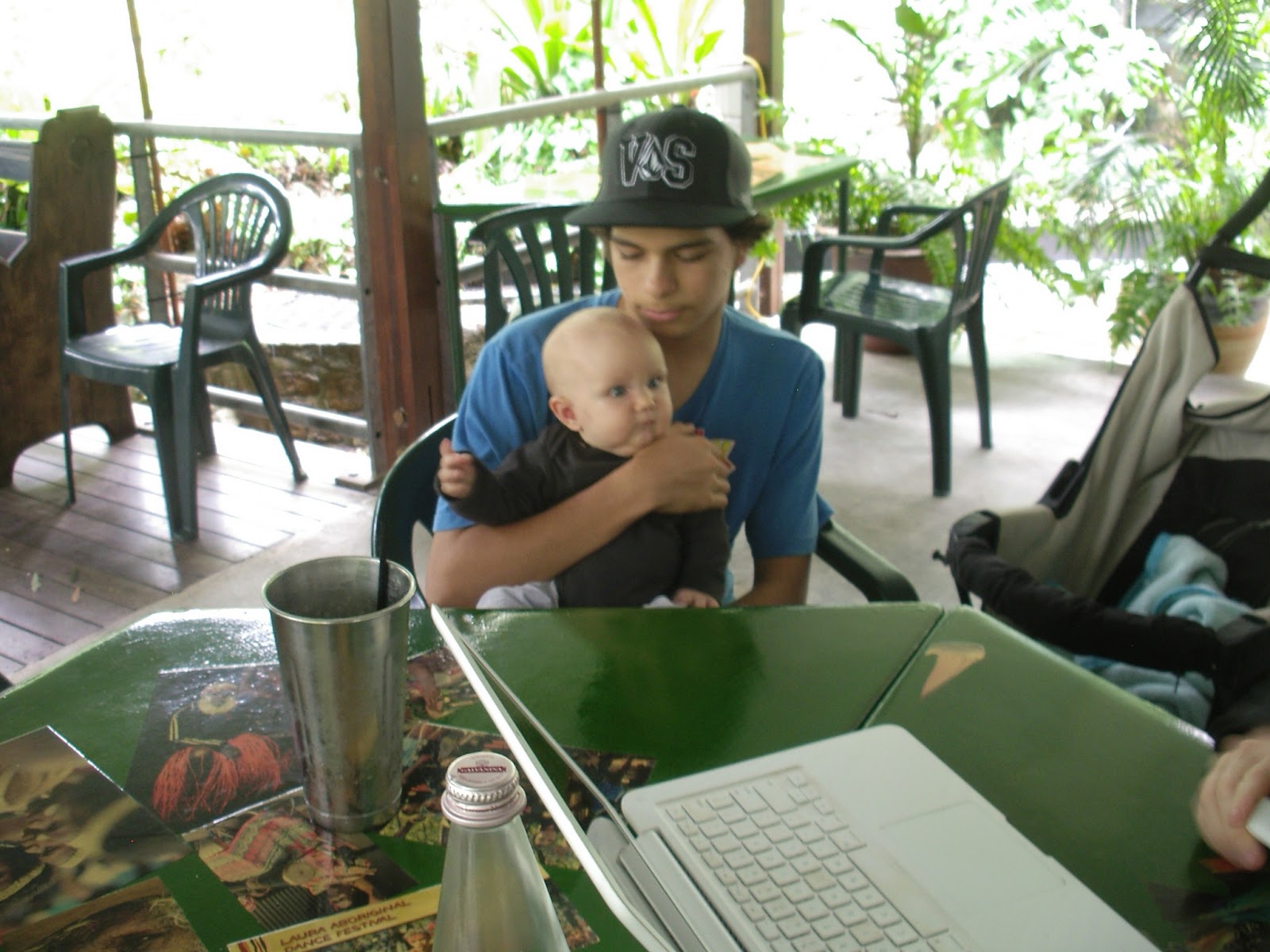
Every time I visited Cooktown in Queensland, Australia, I learned something new. There is a terrace outside the Nature's  PowerHouse where you can have coffee or a meal and at the same time enjoy the vegetation of the Botanic Garden. My daughter often comes here  to work on her computer or just relax. She often meets friends and other people she knows. I always join her when I happen to be in Cooktown.

At Nature's PowerHouse 2006


The Botanic Garden


Inside the Nature's Power House


The youngest grandson in 2006

Bookshop in Nature's PowerHouse


With thanks to Denise Nesbitt, who created the ABC meme.For more interesting ABC posts click on the logo in the sidebar . This week we are looking for words beginning with N.

Monday, 24 November 2014

Our World Tuesday, ABC Wednesday, T for Toadstools,Biology, Netherlands


During our stay at the holiday park in Hoenderloo, we saw a great variety of toadstools, of which we don't know the names. As usual I wanted to have some information about toad-stools and mushrooms, but I got so much to read that I decided to keep this post as short as possible.

The thing is that I must tell you that toadstools are very important for our environment. Without them trees will die and consequently so will we.

Because toadstools are so different from other organism around us, people thought for a long time that they were creations of witches, evil spirits or gnomes.

Now we can enjoy their beauty easily, even if we don't know much about them.

At school I learnt that we can divide them in several groups.


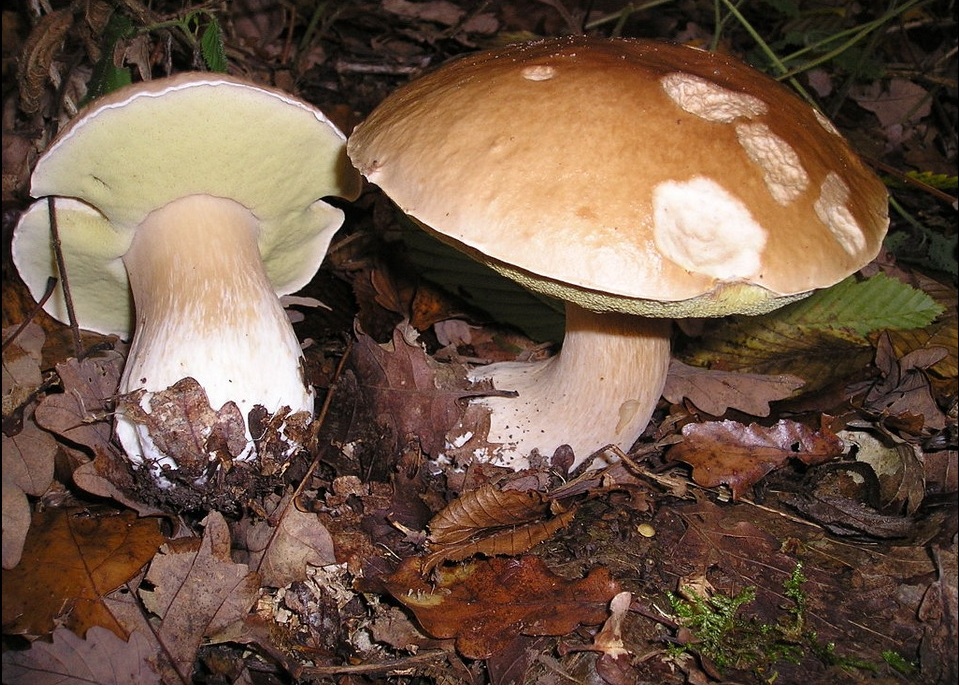
There  are mushrooms with gills under their caps,

but boletes, have tubes extending downward from

the underside of the cap, rather than gills.

Boletus edulis (English: cep, penny bun, porcino, or king bolete, usually called porcini)

(Wikipedia)


The following article might help to understand that this group of fungi is complicated but very interesting.


By Susan Patterson, Master Gardener

Mushrooms are sometimes an annoyance to homeowners who do not welcome them in their gardens or lawns and often wish to get rid of them. However, mushrooms are considered decay fungi and make quick work of organic matter, such as thatch in lawns or compost materials. Their presence in the lawn and garden greatly improve the quality of soil. But how does one distinguish between various types of mushrooms? Continue reading to learn more about mushroom identification.


Mushroom Identification

A real mushroom is in the shape of an umbrella with a cup-shaped or flat cap on top of a stalk. Spores are produced by a group of cells, called basidia, found on the underside of the mushroom cap. While mushrooms come in all shapes, sizes and colors, the general structure remains the same.

These funny looking structures are actually fruiting bodies, or flowers that are produced by fungi. The body of the fungus is actually underground. There are many kinds of fruit bodies that are not true mushrooms, including puffball and morels. There are over 8,000 types of mushrooms found throughout the world. These include toadstools and fairy ring mushrooms.

Toadstool Info

Learning about mushrooms includes toadstool info. Many people are curious about the difference between a mushroom and a toadstool. In fact, the word is often used interchangeably. However, toadstools are actually considered poisonous mushrooms.

To be on the safe side, it is always best to consider all mushrooms as poisonous unless you are an expert at mushroom identification. Poisonous mushrooms, when eaten, can cause serious illness and in some cases, even death.

What are Fairy Rings?

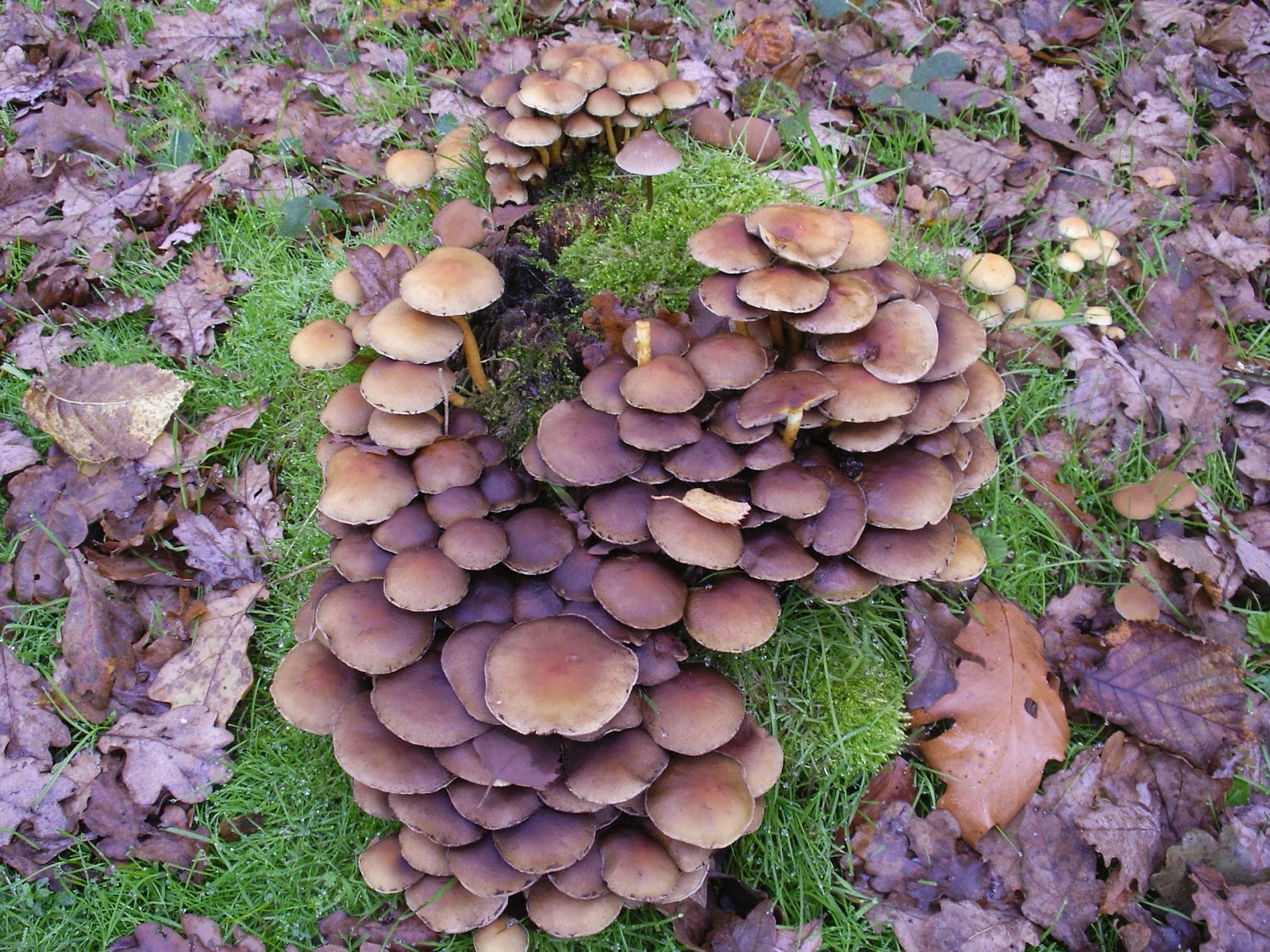
You’ve probably heard mention of fairy rings at some point or other. So what are fairy rings? Lawn mushrooms that form a distinctive arc or circle, especially in the lawn, are known as “fairy rings.” They are the result of a special fungus called fairy ring, and there are between 30 and 60 different types of fairy ring fungi.

Fairy ring fungi feed on decaying matter in the lawn and tend to be worse in poor or sandy soil. Fairy rings can become very dense and kill grass. Good lawn aeration generally helps improve the quality of soil and reduce the presence of fairy rings.

This article was last updated on


.


This is my contribution for the letter T. Thanks to Denise Nesbitt who created this meme about 7 years ago !

Thanks to Roger who organizes these contributions every week.

Welcome to Our World Tuesday! This meme continues in memory of the work of Klaus Peter, whose "that's My World" brought people together from around the world every Monday to share the wonders therein--big and small.Please click on our  logo for "Our World Tuesday" in the sidebar. Thank you Team of O. W. T.!