Showing posts with label T. Show all posts
Tuesday, 22 November 2016
Tuesday, 24 May 2016
ABC Wednesday, T for Tenerife and Travelling
My sister and I decided to go to Tenerife for 10 days. We booked a holiday which was in fact organized for people who were more or less handicapped, and their companions. Though my sister and I are not really handicapped, we still could join this group. Participants could take their own wheelchair or rollator. But we could also hire them in our hotel, which was especially set up for all kind of handicapped people. The name of the hotel was "Mar y Sol",which means "Sea and Sun".
There were two swimmingpools for the guests. One was designed for the handicapped people in a way that even wheelchair people could have a swim.
We left Schiphol at 15:00 and arrived a couple of hours later. There were seven of us and two leaders.
My sister and I had a corner room and a nice and sunny terrace. Every day somebody came to clean the room. We always greeted the cleaning lady in the only Spanish we knew.
"Hola, ?qué tal?"
-"Bien, ?y usted?" ( the first question mark must be upside down, but I can't write it)
Buenos dias. |
My sister on our terrace.
In the evening we went walking with the group along the beach, looking for a café. We passed a place where a sculptor had made a sand sculpture representing the Last Supper
One day we did a bus ride to see the sights of Tenerife and to learn about its history, flora and fauna.
Tenerife is the largest island of the Canaries. It is a volcanic island. Large parts of the beach are covered in black lava sand. There are countless banana plantations, the climate of the island is excellent for growing bananas.
I am always interested in wildlife. We heard that there are no poisonous animals neither are there dangerous beasts of prey which can cause certain problems like plagues of mice, lizards and rabbits
Of course there are pets.We even saw a number of camels.
We had a photo stop in a very picturesque place, called "Los Gigantes".
We had a delicious lunch in a former convent. The only problem was that we had to climb a hill. which was difficult for the wheelchair people.
Another day we had a great boat trip and the weather was so wonderful.! We all enjoyed this small voyage and the views of the island from another angle of vision.
With thanks to Denise Nesbitt, who created ABC.For more interesting ABC posts click on the logo in the sidebar . This week we are looking for words beginning with T.
Labels:
ABC Wednesday,
T,
T for Transport and Travelling
Tuesday, 24 November 2015
ABC Wednesday, T for Tales
With thanks to Denise Nesbitt, who created ABC.For more interesting ABC posts click on the logo in the sidebar . This week we are looking for words beginning with T.
1.a narrative that relates the details of some real or imaginary event, incident, or case; story:
a tale of two Cities.
2.a literary composition having the form of such a narrative.
3.a falsehood; lie.
4.a rumor or piece of gossip, often malicious or untrue.
5.the full number or amount.
6.Archaic. enumeration; count.
7.Obsolete. talk; discourse.
Origin of tale
900
before 900; Middle English; Old English talu (series, list, narrative, story); cognate with Dutch taal ( speech, language), German Zahl ( number), Old Norse tala (number, speech). See tell
" The Canterbury Tales (Middle English: Tales of Caunterbury) is a collection of 24 stories that runs to over 17,000 lines written in Middle English by Geoffrey Chaucer. Between 1386 and 1389 Chaucer began working on his most famous text, The Canterbury Tales. The tales (mostly written in verse, although some are in prose) are presented as part of a story-telling contest by a group of pilgrims as they travel together on a journey from London to Canterbury in order to visit the shrine of Saint Thomas Becket at Canterbury Cathedral."
Tales are very old sometimes, even before 900 there were tales to be found. Very difficult to read,but the modern tales are very popular especially if they are written as fairy tales and for children, like those of Beatrix Potter, who illustrated her books herself. These books have nothing to do with history, like the Canterbury Tales.
One of the many novels of Charles Dickens is a historical novel called "A Tale of Two Cities".
"A Tale of Two Cities (1859) is a novel by Charles Dickens, set in London and Paris before and during the French Revolution. The novel depicts the plight of the French peasantry demoralized by the French aristocracy in the years leading up to the revolution, the corresponding brutality demonstrated by the revolutionaries toward the former aristocrats in the early years of the revolution, and many unflattering social parallels with life in London during the same period. It follows the lives of several characters through these events."
![]() |
These are the first sentences of the book |
Monday, 25 May 2015
Our World Tuesday, ABC Wednesday, T for Tenella Plas in the Netherlands.
In 2008 one of my friends was celebrating her 84th birthday. Her sons had organized a party at a place of outstanding beauty near a small lake. Last year she died at the age of almost 90. She had been paralysed for 10 years. She had always been an enthusiastic sportswoman and in just a few minutes she was paralysed from her head to her feet. She managed to get use of her hands again and her speech.

A "Plas"is a pool or a small lake
We spent a whole afternoon in this park. The weather was fine and we all enjoyed walking along the lake, where we saw coots and mallards.
With thanks to Denise Nesbitt, who created ABC, and Roger, who took over from her. For more interesting ABC posts click on the logo in the sidebar. This week we are looking for words beginning with T.
Welcome to Our World Tuesday! This meme continues in memory of the work of Klaus Peter, whose "that's My World" brought people together from around the world every Monday to share the wonders therein--big and small.Please click on our logo for "Our World Tuesday" in the sidebar. Thank you Team of O. W. T.!
Labels:
ABC Wednesday,
Netherlands,
Our World Tuesday,
T
Monday, 24 November 2014
Our World Tuesday, ABC Wednesday, T for Toadstools,Biology, Netherlands
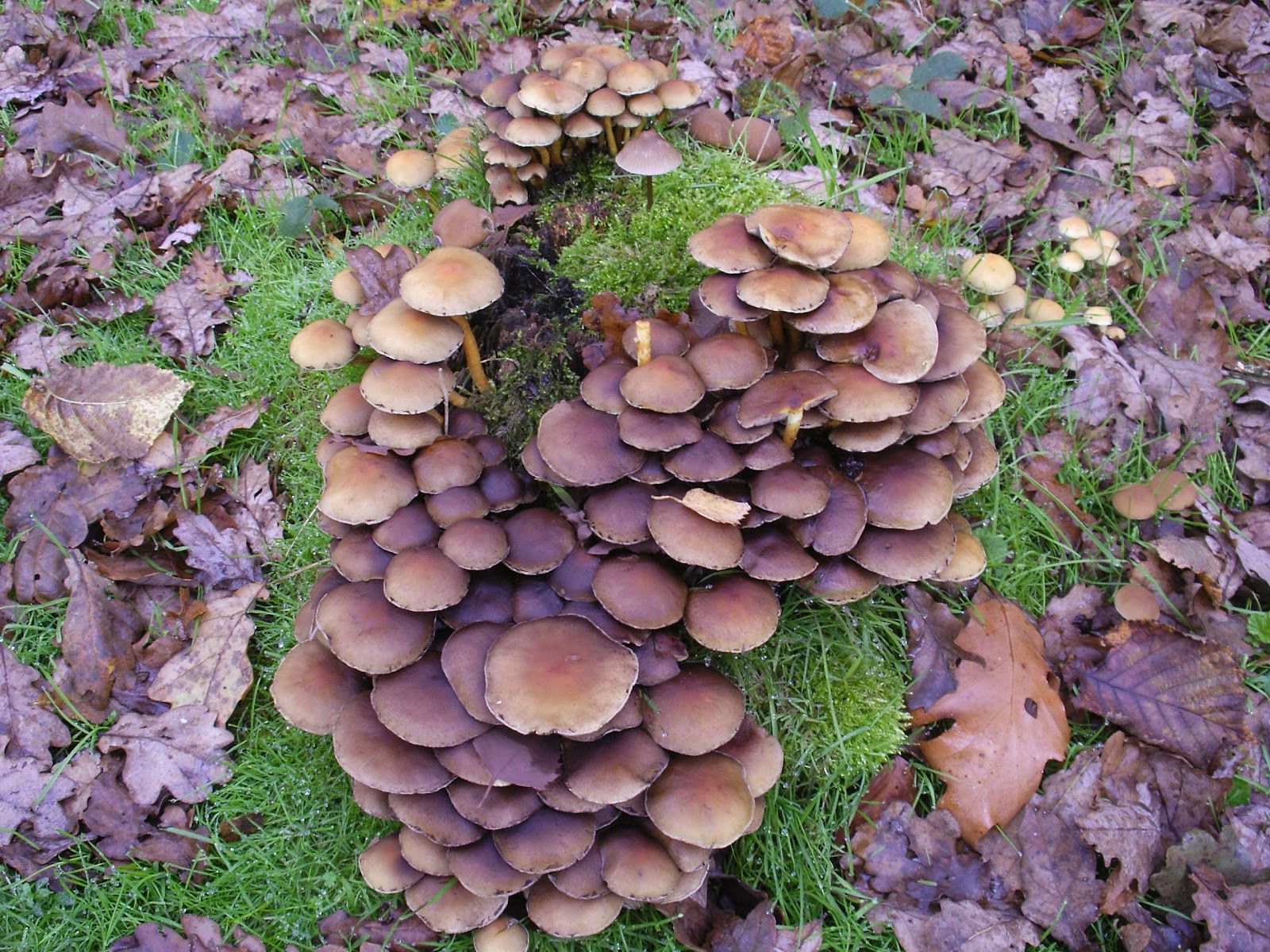
During our stay at the holiday park in Hoenderloo, we saw a great variety of toadstools, of which we don't know the names. As usual I wanted to have some information about toad-stools and mushrooms, but I got so much to read that I decided to keep this post as short as possible.
The thing is that I must tell you that toadstools are very important for our environment. Without them trees will die and consequently so will we.
Because toadstools are so different from other organism around us, people thought for a long time that they were creations of witches, evil spirits or gnomes.
Now we can enjoy their beauty easily, even if we don't know much about them.
At school I learnt that we can divide them in several groups.
![]() |
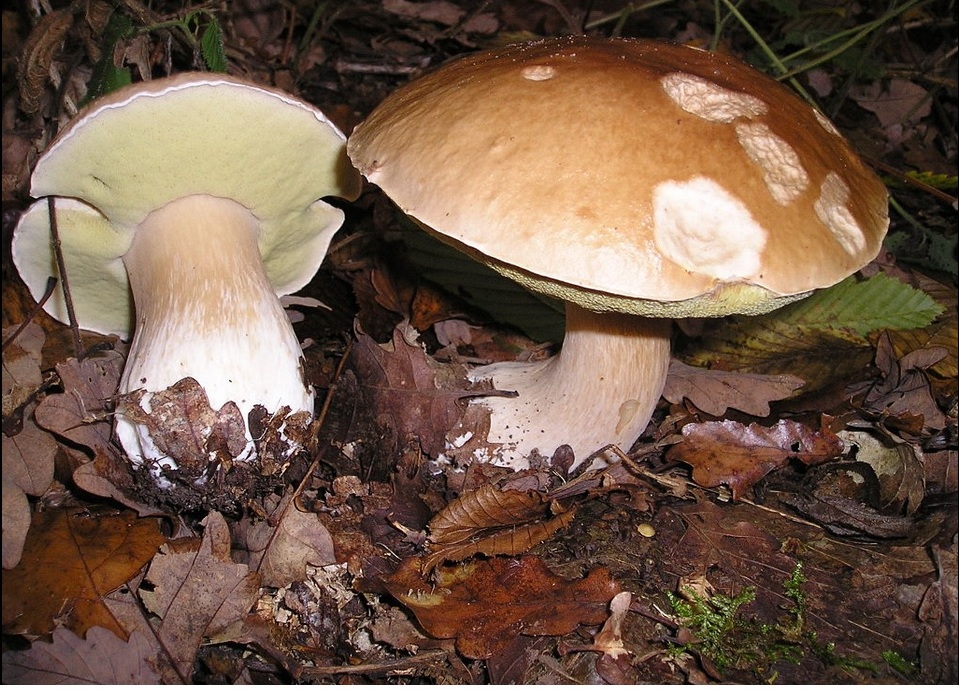
There are mushrooms with gills under their caps,but boletes, have tubes extending downward fromthe underside of the cap, rather than gills.Boletus edulis (English: cep, penny bun, porcino, or king bolete, usually called porcini)(Wikipedia) |
The following article might help to understand that this group of fungi is complicated but very interesting.
By Susan Patterson, Master Gardener
Mushrooms are sometimes an annoyance to homeowners who do not welcome them in their gardens or lawns and often wish to get rid of them. However, mushrooms are considered decay fungi and make quick work of organic matter, such as thatch in lawns or compost materials. Their presence in the lawn and garden greatly improve the quality of soil. But how does one distinguish between various types of mushrooms? Continue reading to learn more about mushroom identification.
Mushroom Identification
A real mushroom is in the shape of an umbrella with a cup-shaped or flat cap on top of a stalk. Spores are produced by a group of cells, called basidia, found on the underside of the mushroom cap. While mushrooms come in all shapes, sizes and colors, the general structure remains the same.
These funny looking structures are actually fruiting bodies, or flowers that are produced by fungi. The body of the fungus is actually underground. There are many kinds of fruit bodies that are not true mushrooms, including puffball and morels. There are over 8,000 types of mushrooms found throughout the world. These include toadstools and fairy ring mushrooms.
Toadstool Info
Learning about mushrooms includes toadstool info. Many people are curious about the difference between a mushroom and a toadstool. In fact, the word is often used interchangeably. However, toadstools are actually considered poisonous mushrooms.
To be on the safe side, it is always best to consider all mushrooms as poisonous unless you are an expert at mushroom identification. Poisonous mushrooms, when eaten, can cause serious illness and in some cases, even death.
What are Fairy Rings?
You’ve probably heard mention of fairy rings at some point or other. So what are fairy rings? Lawn mushrooms that form a distinctive arc or circle, especially in the lawn, are known as “fairy rings.” They are the result of a special fungus called fairy ring, and there are between 30 and 60 different types of fairy ring fungi.
Fairy ring fungi feed on decaying matter in the lawn and tend to be worse in poor or sandy soil. Fairy rings can become very dense and kill grass. Good lawn aeration generally helps improve the quality of soil and reduce the presence of fairy rings.
This article was last updated on
.
This is my contribution for the letter T. Thanks to Denise Nesbitt who created this meme about 7 years ago !
Thanks to Roger who organizes these contributions every week.
Welcome to Our World Tuesday! This meme continues in memory of the work of Klaus Peter, whose "that's My World" brought people together from around the world every Monday to share the wonders therein--big and small.Please click on our logo for "Our World Tuesday" in the sidebar. Thank you Team of O. W. T.!
Subscribe to:
Posts (Atom)